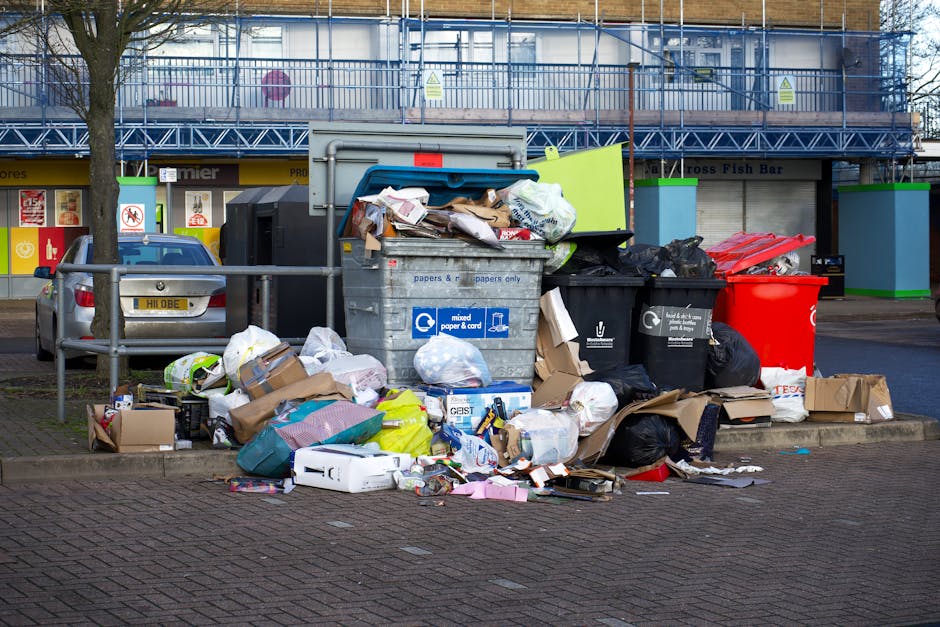
What to know about late rubbish collections in Sudbury
If you have been waiting around for a rubbish collection that is running late in Sudbury, you will know the feeling: the bins are out, the hallway is clear, the lorry should have been here by now, and you are left wondering whether to keep waiting or start making other plans. That uncertainty is the real problem. What to know about late rubbish collections in Sudbury is not just about timing; it is about knowing what usually causes delays, what you can do about them, and how to avoid turning a small hiccup into a bigger headache.
In this guide, we will walk through how late collections work in practice, what good service should look like, when a delay is normal, and when you should chase it up. We will also cover useful checks, common mistakes, and a few real-world tips that make the whole process far less stressful. To be fair, waste removal is not glamorous, but when it goes wrong, it gets noticed very quickly.
Table of Contents
- Why late rubbish collections in Sudbury matter
- How late rubbish collections in Sudbury work
- Key benefits and practical advantages
- Who this is for and when it makes sense
- Step-by-step guidance
- Expert tips for better results
- Common mistakes to avoid
- Tools, resources and recommendations
- Law, compliance, standards, or best practice
- Options, methods, or comparison table
- Case study or real-world example
- Practical checklist
- Conclusion
- Frequently asked questions
Why late rubbish collections in Sudbury matter
A delayed collection can seem minor at first. Then the bags start cluttering the front path, the smell builds on a warm afternoon, and the whole place feels a bit less manageable. If you run a business, late waste pickup can also affect customer impression, hygiene, and day-to-day operations. If you are at home, it can throw off a tidy-up, a move-out, or a renovation schedule. Simple things, but they stack up fast.
Late collections matter because waste is one of those jobs that sits quietly in the background until it does not. Once a pickup is late, you may have to decide whether to wait, rearrange access, or book an alternative service. That is where local knowledge helps. Sudbury has a mix of residential streets, smaller access routes, commercial premises, and properties with awkward collection points. Timing can be affected by all sorts of ordinary things: traffic, weather, missed access, vehicle issues, or an unexpectedly large load.
There is also a trust issue. If a provider says they will arrive within a window and they do not, you want a clear explanation and a sensible next step. No one enjoys chasing it, obviously, but good communication makes a big difference. A late collection with updates is irritating; a late collection with silence is much worse.
How late rubbish collections in Sudbury works
In practical terms, a late collection usually means the crew has not arrived within the expected time slot or is running behind schedule. That does not always mean the job has failed. Sometimes the service is still on the way, just delayed by earlier jobs or road conditions. Other times, the collection may need rescheduling because access was blocked, the waste was not ready, or the quantity was different from what had been arranged.
Most reliable waste removal services work in a route-based way. They plan the day around several stops, and one delay can ripple through the rest of the schedule. A tight route, a narrow road, a full van, or a longer-than-expected clearance can all push later jobs back. Around Sudbury, that is especially relevant in busier spots or where parking and access are awkward. If you have ever watched a large vehicle try to manoeuvre on a narrow road, you will know it can be a slow little dance.
Late rubbish collections can happen in both domestic and commercial settings. The process after a delay should usually look something like this:
- the provider checks whether the crew is still en route;
- you receive an update or revised arrival window;
- the team confirms whether access or load details have changed;
- if needed, the job is rearranged for later the same day or another agreed time.
If the issue is recurring, the provider should review how collection windows are set and whether the quoted service fits the amount and type of waste involved. That is especially important for larger clearances such as a house clear-out, garage clearance, or garden clearance, where the amount can be hard to judge from photos alone.
Key benefits and practical advantages
Knowing what to expect from a late collection is useful because it helps you act early instead of guessing. Here are the main benefits of understanding the process properly:
- Less stress: you know when a delay is normal and when it needs follow-up.
- Better planning: you can avoid leaving access routes blocked or timing another job too closely.
- Fewer surprise costs: if the job changes, you are more likely to spot a fair adjustment before it becomes a dispute.
- Improved hygiene and appearance: quicker action means waste does not sit around as long.
- More control: you can keep the day moving instead of waiting by the window like it is some sort of suspense drama.
There is also a quieter benefit: better decision-making. If a late collection is likely to run into the evening, you can secure items, move vehicles, or protect shared spaces sooner. For households, that may mean keeping pets inside and bags off the pavement. For businesses, it may mean keeping service areas clear and informing staff.
One useful point people sometimes miss: a late collection is not always a bad service. Sometimes it is simply the practical reality of a busy route. The real measure is how clearly the provider communicates and whether they still complete the job properly.
Who this is for and when it makes sense
This topic matters to a wide range of people, but the reasons differ a bit.
Homeowners and tenants usually need help when council-style collections are delayed, when they have booked a private clearance, or when bulky waste is waiting to go. If you are moving out or doing a deep clean, timing matters because one missed pickup can hold up the rest of the day.
Landlords and letting agents often need reliability more than anything else. A late rubbish removal on changeover day can be awkward, especially if keys, cleaners, and new tenants are all working to the same clock.
Businesses are often more sensitive to delay because waste can affect operations, appearance, and health and safety. Retail units, offices, workshops, and hospitality settings all feel the knock-on effect differently, but they feel it.
Builders and trades may need collections after strip-out work or during a project where the waste pile grows quickly. Here, lateness can become a space problem fast. Bags, timber, broken fixtures, and packaging do not sit quietly forever.
It also makes sense for anyone comparing a few options before booking. If you are deciding between a full clearance, a smaller pickup, or a more staged approach, it helps to understand what happens if the crew arrives later than expected. That is part of the service, not an afterthought.
Step-by-step guidance
If your rubbish collection in Sudbury is late, the best response is calm and methodical. That sounds obvious, but when you are looking at bags by the gate, easy to say, harder to do.
- Check the booking details. Confirm the date, time window, access notes, and what was included. Misread timings happen more often than people admit.
- Look for any update messages. Emails, texts, or call notes can show whether the crew is delayed or whether the job has shifted.
- Check access. Make sure gates are open, vehicles are moved, and the waste is reachable. A blocked route can cause a perfectly avoidable delay.
- Confirm the waste matches the booking. If you added more bags, heavier items, or extra bulky waste, the schedule may need adjusting.
- Contact the provider if the delay is outside the expected window. Keep it short and clear. Ask whether the crew is still due that day or whether a revised time is needed.
- Record any important details. A quick note about who you spoke to and what was agreed can prevent confusion later.
- Prepare for a revised arrival. If the team is still coming, keep access clear and items secure so there is no second delay.
Here is the practical version: do not assume the job is cancelled just because it is late, and do not assume it is still happening just because nobody has said otherwise. Ask. The answer is usually simpler than the worry in your head.
If the collection is part of a larger clearance, it can help to separate items by type. For example, keep furniture in one area and mixed bags in another. That way, if the crew arrives late, they can still work quickly once they are on site.
Expert tips for better results
People often focus only on the collection window. Fair enough. But the smoother jobs usually start before the van arrives.
Be precise about volume. A photo is helpful, but it is not magic. If you are close to a full load, say so. If the waste includes awkward items like a fridge, mattress, or broken wardrobe, mention that too. It changes the handling and the loading time.
Leave practical access notes. Low arches, narrow lanes, shared driveways, controlled parking, and tight turns all matter. A five-second explanation can save a lot of faffing about on the day.
Keep the pile tidy. Bags stacked neatly and items grouped by type speed things up. A scattered pile in a damp corner is slower to assess and slower to move. It is one of those tiny things that makes a visible difference.
Choose a realistic time window. If your day is packed, avoid a slot that leaves no breathing room. Late collections are less stressful when you have not stacked them immediately before school pickup, a delivery, or a meeting.
Ask how delays are handled. A good provider should be able to explain what happens if the team runs late. That clarity is worth more than a flashy promise. Truth be told, the way a company handles a delay says a lot about the rest of its service.
You may also want to think about related disposal needs at the same time. For example, if you are clearing out furniture or bulky household items, it can be worth reviewing furniture clearance and mattress and sofa disposal options so the job is handled in one go rather than as several separate headaches.
Common mistakes to avoid
A lot of delay-related frustration comes from small avoidable issues rather than major failures. The good news is that most of them are easy to sidestep once you know what to look for.
- Leaving the waste unprepared: if the pile is scattered, blocked in, or mixed with items not mentioned in the booking, the crew may need longer or may not be able to complete the load.
- Assuming the arrival time is fixed to the minute: many collection windows are approximate, especially for route-based work.
- Forgetting access restrictions: locked gates, parked cars, and narrow entrances are classic causes of delay.
- Adding extra waste without telling anyone: one extra bag can be fine; a whole extra roomful is another matter.
- Waiting too long to follow up: if the delay matters to your day, raise it early rather than hoping it magically resolves itself.
A quieter mistake is choosing a service without checking what it actually covers. For example, a mixed domestic clearance is different from a builders' waste clearance or a garden tidy-up. If you need a broader clearance, services such as house clearance, garden clearance, or builders waste clearance may be more appropriate than a simple one-off pickup.
And yes, sometimes the issue is just a dog, a neighbour, or a delivery van blocking the route. The world is never quite as orderly as the booking form suggests.
Tools, resources and recommendations
You do not need a complicated setup to manage a late collection well. A few simple tools and habits can help a lot.
- Your booking confirmation: keep it accessible so you can check the date, time, and any item limits.
- A phone with signal: obvious, but useful if the provider needs to update you while the crew is out on route.
- Photos of the waste: handy for clarifying load size, especially for larger clearances.
- Notes on access: write down gate codes, parking restrictions, or specific arrival instructions.
- Separate containers or areas: useful if you need to split recycling, reusable items, and general waste.
If you are comparing services, it can help to look at pricing structure, what is included, and how updates are handled if timings slip. The pages on pricing and quotes, waste removal, and recycling and sustainability can help you think through value as well as convenience. That is especially useful if you want a service that is not just quick, but sensible about sorting and disposal too.
For larger or more specific jobs, it is also worth checking specialist pages such as garage clearance, loft clearance, or office clearance. The more closely the service matches the actual job, the less likely you are to end up with timing confusion later.
Law, compliance, standards, or best practice
When rubbish collections are late, the legal issue is usually not the lateness itself but what happens to the waste and how it is handled. In the UK, waste must be managed responsibly, and any service you use should handle material safely, legally, and with the right care for different waste types. That is especially relevant for items that need special handling, such as electrical appliances, chemicals, or other potentially hazardous materials.
From a best-practice point of view, a trustworthy waste provider should be clear about collection arrangements, item restrictions, safety considerations, and what happens if the job cannot be completed as planned. It is also sensible for businesses to keep good records of waste removal arrangements and to separate waste streams properly where practical. Nothing glamorous about that, but it avoids problems later.
If the waste includes sensitive material, safety concerns, or items that should not be mixed with ordinary rubbish, check the relevant service beforehand. For example, hazardous waste disposal and confidential shredding exist for a reason. Not everything belongs in a standard mixed load, and trying to squeeze everything into one trip can backfire.
For businesses especially, it is worth thinking about insurance, safety, and secure handling. Pages like insurance and safety and health and safety policy are useful indicators of whether the provider takes the job seriously. That does not mean you need a lecture on compliance every time you book a collection. It just means the basics should be clear and sensible.
Options, methods, or comparison table
When a collection is late, you usually have a few options. The right one depends on how urgent the situation is, how much waste is involved, and whether the provider is still en route.
| Option | Best for | Pros | Watch-outs |
|---|---|---|---|
| Wait for the delayed collection | Jobs already in progress | No need to reorganise, often simplest if the team is still nearby | Can waste time if no clear update is available |
| Reschedule the pickup | Non-urgent waste | Lets you reset expectations and plan properly | May delay tidy-up plans or project timelines |
| Book a more suitable service type | Large, mixed, or awkward loads | Better fit for the actual job, often smoother overall | May require a new quote or revised timing |
| Split the waste into separate collections | Big clearances or mixed materials | Can reduce bottlenecks and speed handling | Takes a little more planning and coordination |
If you are handling a one-off household clear-out, waiting may be fine. If you are dealing with a shop, office, or trade site, a revised schedule might be the smarter move. There is no prize for stubbornness here.
Sometimes the cleaner approach is to plan around the load itself. For example, a bulky sofa and a broken appliance may be better handled through dedicated services such as fridge and appliance removal or furniture disposal rather than bundled into a generic pickup at the last minute.
Case study or real-world example
Imagine a household in Sudbury clearing out a spare room before family arrives at the weekend. Bags are ready, an old wardrobe has been broken down, and there is a mattress by the wall. The collection window is late afternoon. By 5 p.m., nothing. The easy mistake would be to keep guessing. Instead, the household checks the confirmation, confirms the access notes, and rings the provider.
The answer is simple: the crew was held up on an earlier job because a larger-than-planned clearance took longer than expected. The van is still coming, but the arrival window has slipped by an hour. Because the waste was stacked neatly and the driveway was clear, the team can unload quickly once they arrive. Not ideal, but manageable.
Now compare that with a less organised version. Bags are scattered, a car blocks the driveway, and nobody mentioned the extra pile in the shed. The late arrival becomes a longer job, the crew has to wait for access, and the whole thing drags into the evening. Same booking, very different outcome.
That is the part people sometimes underestimate. A late collection is annoying, yes. But a late collection combined with poor preparation can turn into a truly tedious afternoon.
Practical checklist
Use this quick checklist when dealing with a late rubbish collection in Sudbury:
- Confirm the booking date and expected time window.
- Check for texts, calls, or emails with updates.
- Make sure access is open and safe.
- Move cars, bins, or other obstacles out of the way.
- Keep the waste together and clearly visible.
- Check whether anything extra was added after booking.
- Call the provider if the delay is outside the expected window.
- Note down any revised arrival time.
- Separate specialist items if they need special handling.
- Keep pets, children, and shared walkways clear until the job is done.
Expert summary: the best way to handle a late collection is to stay flexible, keep access clear, and ask for a clear update early. Small preparation on your side often saves a big delay later. It is boring advice, maybe, but it works.
Conclusion
Late rubbish collections in Sudbury are frustrating, but they do not have to turn into chaos. Once you understand how delays happen, what information matters, and how to respond, the whole thing becomes much easier to manage. Most of the time, the key is simple: check the details, keep access clear, communicate early, and choose the right type of service for the job.
If you are planning ahead, it also helps to think beyond the single collection. A well-matched service, sensible timing, and a tidy load can save you a lot of chasing around later. That is true for households, landlords, trades, and businesses alike. A little foresight goes a long way.
Get a free quote today and see how much you can save.
And if the day has already gone a bit sideways, that is alright too. Sort the next step, breathe out, and keep it moving.
Frequently Asked Questions
What should I do if my rubbish collection in Sudbury is late?
Start by checking your booking details and any updates from the provider. Then confirm access is clear, look for any note about delays, and contact the company if the collection is outside the expected window. Keeping the waste ready and accessible helps if the crew is still on the way.
Does a late rubbish collection mean the job has been cancelled?
Not necessarily. Delays can happen for ordinary reasons such as traffic, longer jobs earlier in the route, or access issues. It is better to ask for a clear update rather than assume the collection is off.
How long should I wait before chasing a delayed collection?
That depends on the time window you were given. If the arrival slot has passed and you have not heard anything, it is reasonable to follow up. If you were told the team may be running behind, give them the revised window unless the delay becomes excessive.
Can I leave rubbish outside overnight if the collection is late?
Sometimes you may need to, but it is not always ideal. Weather, animals, passers-by, and general mess can become a problem. If possible, keep waste secure and follow any advice from the provider about what to do if the pickup is delayed.
What causes late rubbish collections most often?
Common causes include traffic, access problems, underestimated load size, previous jobs taking longer than planned, and occasional vehicle issues. A collection can also run late if the waste is not ready or if the booking details were incomplete.
Are late collections more common for bulky waste?
They can be, simply because bulky waste often takes longer to load and may need more care. Furniture, appliances, and awkward items can slow things down, especially if the team has to navigate narrow access or stairs.
What if my waste includes a fridge, mattress, or sofa?
Special items should be mentioned when you book, because they may need a more suitable disposal method. Dedicated services such as appliance or furniture removal are often easier than hoping they will fit into a standard load at the last moment.
Will a late collection cost more?
Not always. If the delay is caused by scheduling or route changes, the price may stay the same. If the job changes because there is more waste than expected, the provider may need to adjust the quote. It is best to clarify this before the crew arrives, if possible.
How can I avoid delays with future rubbish collections?
Give accurate details, keep access clear, separate specialist items, and choose a realistic time window. If the job is large or awkward, a slightly more flexible booking can make the whole thing easier.
Is a late rubbish collection a problem for businesses in Sudbury?
It can be, especially if waste builds up near customers, staff areas, or entrances. Businesses usually benefit from tighter planning and clearer communication because even a short delay can affect appearance and operations.
What should I ask the provider when a collection is running late?
Ask whether the crew is still coming, what the revised timing is, whether access or load details have changed, and whether you need to do anything before arrival. Short, direct questions usually get the clearest answers.
What is the best way to prepare for a collection that might run late?
Keep the waste tidy, preserve clear access, and make sure someone can answer the phone if the provider needs to update you. A little preparation makes the delay far less disruptive, and honestly, that is half the battle.